
Disease Management Key to Protecting Georgia Peanut Yields

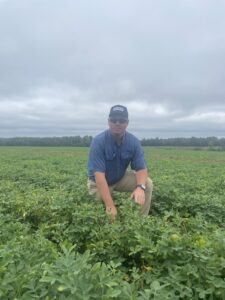
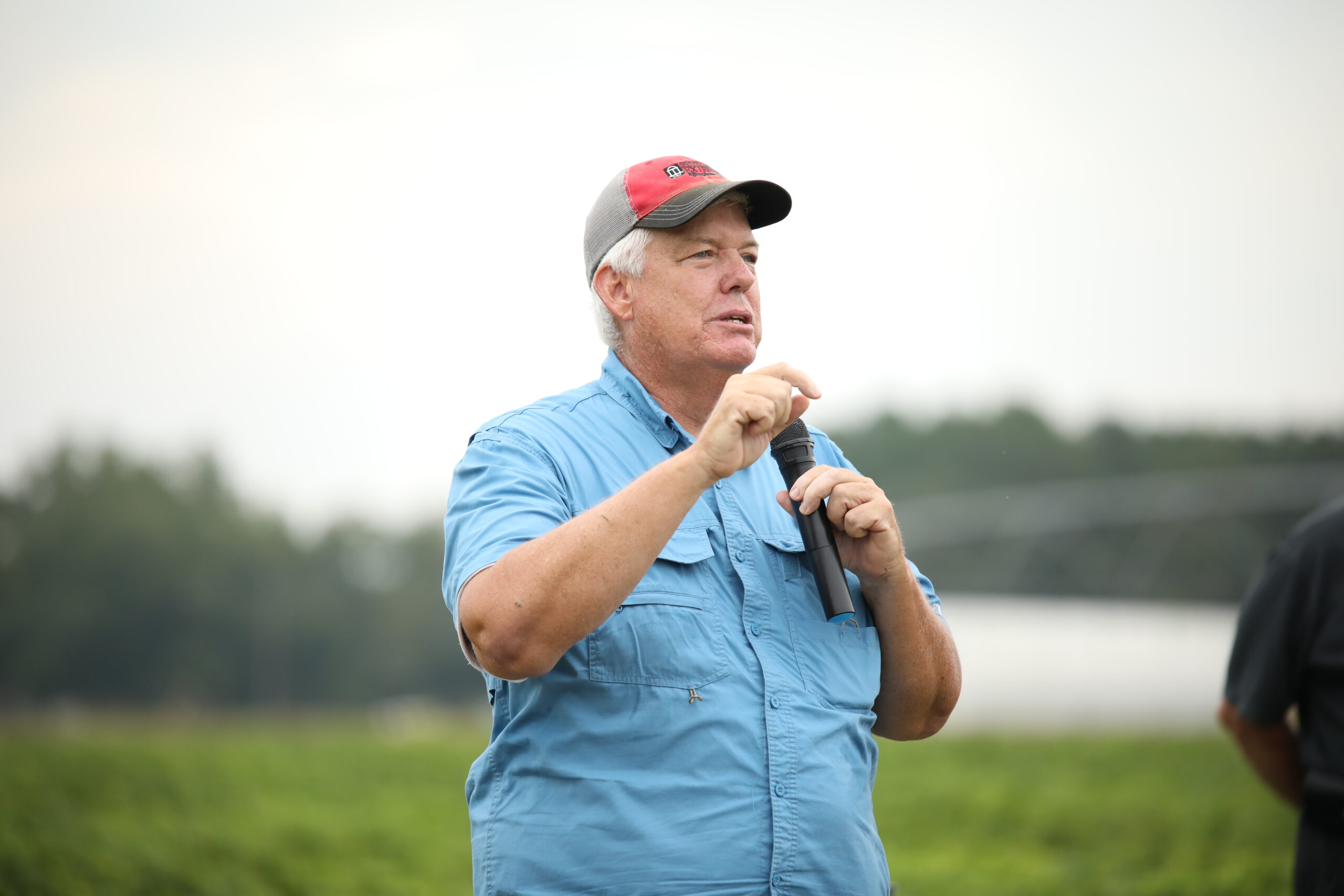
University of Georgia extension specialist and plant pathologist Bob Kemerait works with diseases and nematodes affecting peanut crops. During the 2026 Georgia Peanut Tour visit to the Southeast Georgia Research and Education Center in Midville, Kemerait discussed the disease challenges Georgia peanut growers face and the importance of protecting the crop’s yield potential.

“When we bring people on this Georgia Peanut Tour, they seem to see some of the best of the best peanuts grown anywhere in the world,” Kemerait says. “And it’s easy when you see the peanuts growing, it’s easy to underestimate just how hard our growers have to work to make them look as good as they do.”

Georgia’s hot, humid weather creates ideal conditions for fungal diseases, including leaf spot and white mold. Growers also have to manage tomato spotted wilt virus. Kemerait says growers must invest in the right varieties, crop rotation and fungicides to protect their crop throughout the growing season.

“Right now, our peanut crop has the opportunity to make 6,000 pounds per acre or more with the good varieties we have,” Kemerait says. “But if you do not manage disease, it could take it down to 4,000, 3,000, 2,000 pounds per acre.” Effective disease management is critical to protecting the yield potential of Georgia’s peanut crop.

Kemerait also highlighted the importance of the Southeast Georgia Research and Education Center at Midville, where researchers from multiple disciplines work together to address challenges facing growers. Plant pathologists, entomologists, weed scientists, agronomists and agricultural engineers conduct research at the station to develop solutions for crop production in southeast Georgia.

“The most important thing about this station is whether you are an entomologist, a weed scientist, an agronomist, an agricultural engineer, a plant pathologist, we all do research here with Anthony Black and his team to try and find solutions to what the growers face in this area,” Kemerait says. “It’s a jewel we have hidden here.”

View the 2026 Georgia Peanut Photo Album.


2026 Georgia Peanut Crop Update

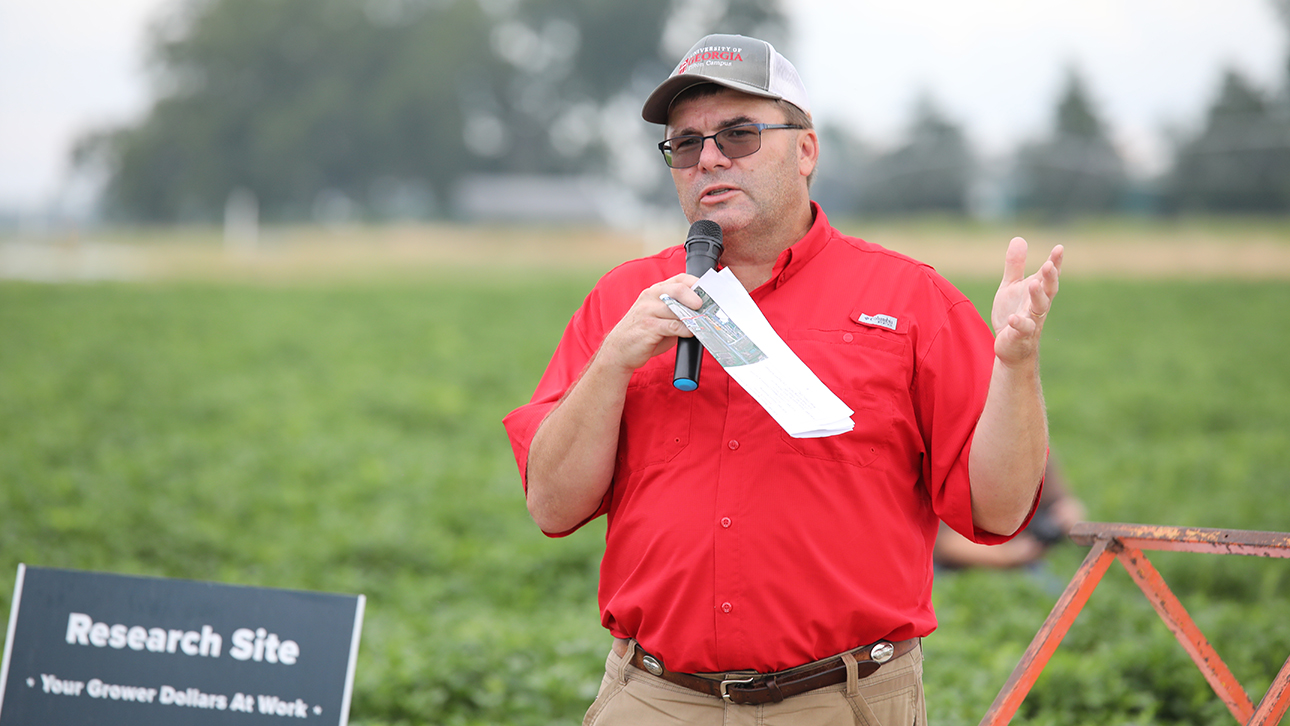
During the 2026 Georgia Peanut Tour, Scott Mumford, University of Georgia Extension peanut agronomist, provided an update on the peanut crop and some of the challenges growers have faced throughout the season.

According to Mumford, the 2026 crop is about 110 to 120 days into the growing season and has experienced both favorable and challenging conditions.

“We have had a lot of good things that happen for most of the growers in the state, but we also have had some bad things happen,” Mumford says. “It’s kind of an average year for us. We’ve struggled from planting all the way to now, and a large part of that struggle has been the weather.”

One of the biggest challenges this season has been sporadic rainfall. While irrigation has helped growers manage conditions in some areas, Mumford says irrigation alone cannot fully meet the crop’s needs. As a result, dryland fields across the state have responded differently depending on the rainfall they have received.

“You’re going to see some dryland crops that don’t look too good, and then we’re also going to see some that do,” Mumford says. “It’s not been a great season, but it’s been a good average season for us. Been a little bit better than the last two seasons has been for us.”

Growers have also had to manage diseases, insects and other production challenges throughout the season. Despite those issues, Mumford says growers have stayed on top of their management practices, helping the crop maintain its yield and quality potential.

“We are fighting diseases. We’re fighting insects, as well as some other issues, like I mentioned,” Mumford says. “But for the most part, our growers have stayed on top of those. And at this point, we think we’re going to have a pretty good crop yield-wise, but also quality-wise, and hopefully you’ll get to see that on this tour.”

View the 2026 Georgia Peanut Photo Album.

What is a Peanut Entomologist?

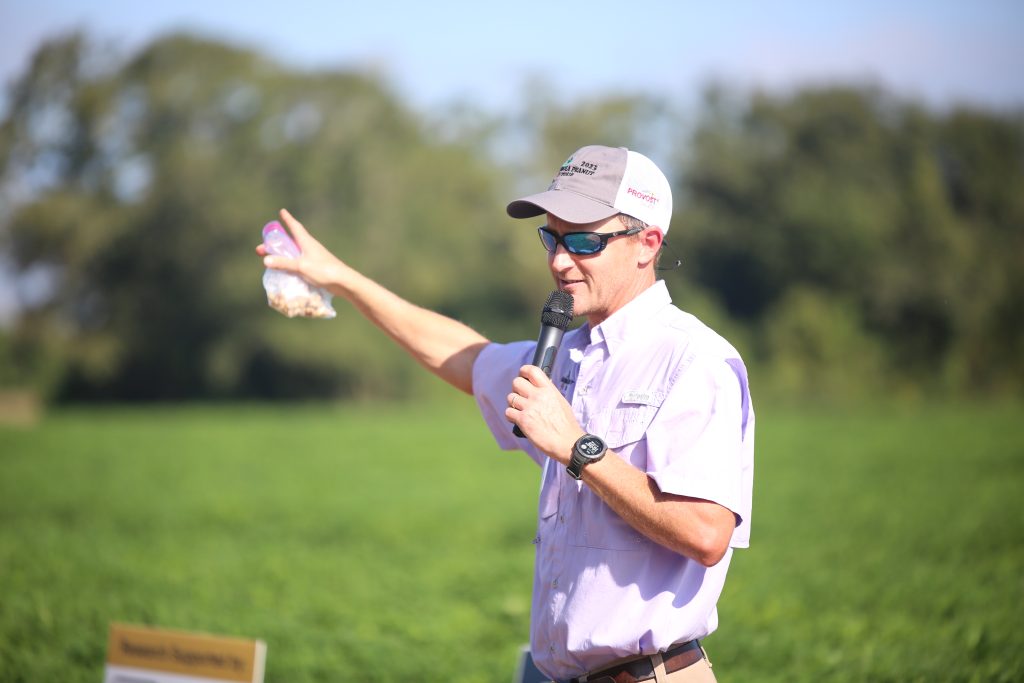
Mark Abney, peanut entomologist at the University of Georgia, provided an overview of his work during the 2026 Georgia Peanut Tour. He receives the question many times from people asking, what does the peanut entomologist at the University of Georgia do?
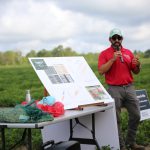
According to Abney, his research and extension responsibilities center on helping growers manage insects in ways that protect their crop and improve profitability.

“We’re really interested in now is continuing to work on lesser cornstalk borer,” Abney says. “That’s an insect that affects all of our growers wherever they are in the state.”

Abney conducts research across Georgia because peanut production occurs in a variety of environments throughout the state. Research is conducted at locations including Tifton, Plains and Midville to better understand what growers in different areas need to do to manage insects most effectively.

“When you look across the state, you’ll see that there’s a lot of different environment,” Abney says. “We grow peanuts in different kind of places. It’s really important that we do research all over the state.”

At the end of the day, insects can cost growers money. While insects can be found in almost every peanut field in Georgia, they do not always need to be controlled. Some insects are pests while others are beneficial. In some cases, an insect may be considered a pest, but the population in the field may not be high enough to warrant an insecticide application.

That is where Abney sees his role as the peanut entomologist in helping growers. His research focuses on the insects that occur in peanuts, developing thresholds and evaluating insecticides and other management tools to determine what works best and what is most economical for growers.

The goal is to help farmers reduce the risk of insect injury, protect yield and make profitable decisions about when and how to manage pests.

The lesser cornstalk borer continues to be an important insect pest across Georgia. Abney’s research also looks at how soil types can influence pest pressure, including differences researchers see  in areas such as East Georgia.

The southern corn rootworm is another historical pest problem in Georgia peanuts. Recently, however, growers have begun dealing with another rootworm pest, the banded cucumber beetle.

The banded cucumber beetle has expanded its range into areas where the southern corn rootworm did not used to be a problem. As a result, growers in East Georgia are now reporting banded cucumber beetles in areas where they previously did not have to manage the pest.

“The research we’re doing now is focused on trying to give growers answers of how they can most appropriately, most effectively manage that pest in peanuts because it’s one that they’ve never had to deal with before,” Abney says.

Every year is different in terms of insect and disease pressure and 2026 is no different. The production year started out cool and with thrips pressure and tomato spotted wilt virus. Later in the season, farmers dealt with foliage-feeding caterpillars, including velvetbean caterpillars, which came into some areas during the last few weeks of the growing season.

According to Abney, the 2026 peanut season has been an average year in terms of insect pressure. Conditions have varied across the state, with some areas experiencing more foliage-feeding caterpillars while other areas have experienced less pressure.

Overall, Abney says growers have been able to manage insects pests effectively.

“I think we’ve been able to manage our insect pests effectively,” Abney says. “I think growers have done a really good job listening to extension recommendations, listening to their county agents, having county agents come out and give them the advice.”

Abney’s research and extension program ultimately focuses on providing growers with the information they need to make effective pest-management decisions.

That’s really what we do in extension as a specialist: is provide the information to county agents so that they can deliver it to the farmers,” Abney says. “So that they can reduce losses by making the most effective management practices, the most effective strategies that they have to control pests in their peanuts..”

View the 2026 Georgia Peanut Photo Album.


UGA Peanut Breeding Update By Nino Brown

Nino Brown, University of Georgia peanut breeder provided an update on the university’s peanut breeding program during the 2026 Georgia Peanut Tour. Brown develops new peanut varieties for growers in Georgia as well as surrounding states, with a focus on developing varieties that meet the needs of growers and others throughout the peanut industry.

“Our primary customer is the grower, and that’s who we really strive to serve first and foremost,” Brown says. The breeding program focuses on improving yield, grade, disease resistance and agronomic characteristics, while also addressing traits such as nutrition, flavor and composition. Brown says the goal is to develop varieties that serve the needs of growers, shellers, manufacturers and consumers.

Because peanuts are grown across many different environments in Georgia, Brown says the varieties developed by the breeding program need to perform well throughout the state. That makes stability an important consideration in the breeding process. Brown defines stability as a variety’s ability to perform at a high level across many different environments. Researchers test new varieties at as many locations as possible to identify lines that can consistently perform well under different growing conditions.

The University of Georgia’s research and education centers provide a network of locations across the peanut-growing region for those trials. Brown says the breeding program has trials in Attapulgus, Camilla at the Stripling Irrigation Park, Plains, Tifton, Chula and Midville. Testing varieties across these locations allows researchers to evaluate how they perform under a range of environmental and growing conditions.

Midville is a particularly important testing location for the breeding program. Brown describes it as a unique environment for Georgia and one of the program’s largest yield trial locations. A major focus is ensuring that varieties developed in Tifton can also perform at a high level in Midville and other areas of eastern Georgia.

Developing varieties with those traits requires significant effort and financial investment, making support for the breeding program an important part of the process. “It takes a lot of effort, a lot of money to be able to achieve those things, and so we’re really grateful for the support from the Georgia Peanut Commission to achieve those goals that we’re trying to accomplish,” Brown says.

View the 2026 Georgia Peanut Tour Photo Album


Welcome to the 2026 Georgia Peanut Tour

We would like to welcome you to the 2026 Georgia Peanut Tour. Whether this is your first time joining us or you are a “Peanut Tour Veteran,” we are very happy to host you on our 38th tour. As in previous years, you will be immersed in the production of one of Georgia’s most important agricultural crops. We hope this experience gives you greater insight into the challenges our farmers face, as well as the many reasons we proudly say that the world’s best peanuts are produced in Georgia. On this year’s tour you will be see peanut production from A to Z. It is our hope that you will come away with a great understanding and appreciation of the legacy, hard work, and dedication that go into peanut production in our state. Those engaged in the peanut industry, including farmers, buyers, processors, researchers, Extension personnel, and representatives of the Georgia Peanut Commission, are proud that Georgia is the leading peanut-producing state in the United States, and we are excited to share this year’s crop with you.

The 2026 Georgia Peanut Tour is staged in the south-east region of our state’s production area and begins on the afternoon of Tuesday, September 22, with a “Hot Topics” symposium. Expert speakers will provide updates on the status of this year’s peanut crop, with a special focus on enhancing the resilience of the peanut industry.

The next two days of the tour will provide opportunities to learn more about peanut production, research, processing and more. Field visits will give you a glimpse of peanut production, digging, and harvest. You will also learn about the important role research plays in the peanut industry, from improving crop production in Georgia to managing pests and addressing other challenges facing growers. The tour will also take you through several important parts of the peanut industry and production chain, including stops at the Ports of Savannah, the Southeast Research and Education Center, Mana Nutrition and other locations.

Again, on behalf of the Peanut Tour Committee, with members from the USDA-ARS Peanut Lab, the Georgia Peanut Commission, and the University of Georgia, I warmly welcome you to the 38th Georgia Peanut Tour! We hope that over the next few days you will better appreciate the complexity of the peanut industry in Georgia and the personal commitments from all involved in producing the world’s finest peanuts! We hope our events will allow for fellowship and that you enjoy Georgia’s hospitality exploring a beautiful, rural part of our state. We offer our sincere thanks to all the sponsors, who through their generosity, help make this tour possible. Please do not hesitate to let us know how we can help you as we travel the highways and byways of our state’s production area. We are proud of our peanut farmers and our peanut industry, and we are happy that we can share them with you.

View the 2026 Georgia Peanut Tour Photo Album


2026 Georgia Peanut Tour set for Savannah area

The thirty-eight annual Georgia Peanut Tour will be held Sept. 22-24, 2026, in Savannah, Georgia, and the surrounding area. The tour brings the latest information on peanuts while giving a first-hand view of industry infrastructure from production and handling to processing and utilization. Tour stops will be made in several peanut producing counties in South Georgia.

Attendees can expect to see first-hand nearly every aspect of peanut production in the state. This year’s tour hosts many exciting stops including on-farm harvest demonstrations and clinics, research at the University of Georgia Southeast Research and Education Center, Georgia Ports Authority and MANA Nutrition.

The tour kicks off this year with the Hot Topics Seminar on Sept. 22 at 2:30 p.m. at The Clyde Venue in Savannah, Georgia. The seminar topics include an update on the 2026 Georgia peanut crop and a special focus on production challenges, enhancing production and climate issues with emphasis on irrigation, fertilizer and other inputs.

For attendees flying, the closest airport is the Savannah/Hilton Head International Airport in Savannah, Georgia. Hotel accommodations can be made at the host hotels, Embassy Suites Savannah Historic District or the Hampton Inn & Suites Savannah Historic District in Savannah, Georgia, by calling 800-548-8690 and mention the code 90P for Embassy Suites and 90W for Hampton Inn. Reservations can also be made online. The room block’s deadline is Aug. 7, 2026.

For specific tour info or details, contact David West at 229-386-3470.

The Georgia Peanut Commission, University of Georgia College of Agricultural and Environmental Sciences and the USDA-ARS National Peanut Laboratory coordinate the tour.

Register online  (Online Registration Now Closed)
Print Registration Form
Download Tour Schedule
Driving Directions & Maps – Wednesday
(Thursday map not available since everyone will be riding the buses)
Download Sponsorship Packet

Inside Tifton Quality Peanuts: A Look at Tifton’s Grower-Owned Shelling Facility

After leaving MANA Nutrition, tour attendees hopped on I-75 and headed south to Tifton Quality Peanuts in Tifton, Georgia. Tifton Quality Peanuts began its shelling operation in 2005 and has been running strong ever since. The company is a grower-owned shelling facility. One of the highlights of the tour was the very large domes where the peanuts are stored. Each of the three domes can hold up to approximately 13,000 tons of peanuts. Between the domes and additional warehouses, the facility can store up to 70,000 tons on site.

Attendees walked through the entire shelling process. It begins with peanuts being moved out of storage and into the plant, where they pass through a series of machines. First, the peanuts go through cleaning equipment to remove dirt, rocks, and other foreign materials. From there, they enter a rotating machine that breaks open the hulls, allowing the kernels to separate. The peanuts then move on to a color sorter, which detects defects in each kernel. Defective peanuts are identified by specific colors and separated from the high-quality kernels. Next, the kernels are sized before being packed into large totes and placed in cold storage.

So where do the peanuts go once they are shelled? Companies like Mars Snackfoods, Hershey, and Tom’s Snacks purchase them to use in some of your favorite treats!

View the 2025 Georgia Peanut Tour Photo Album

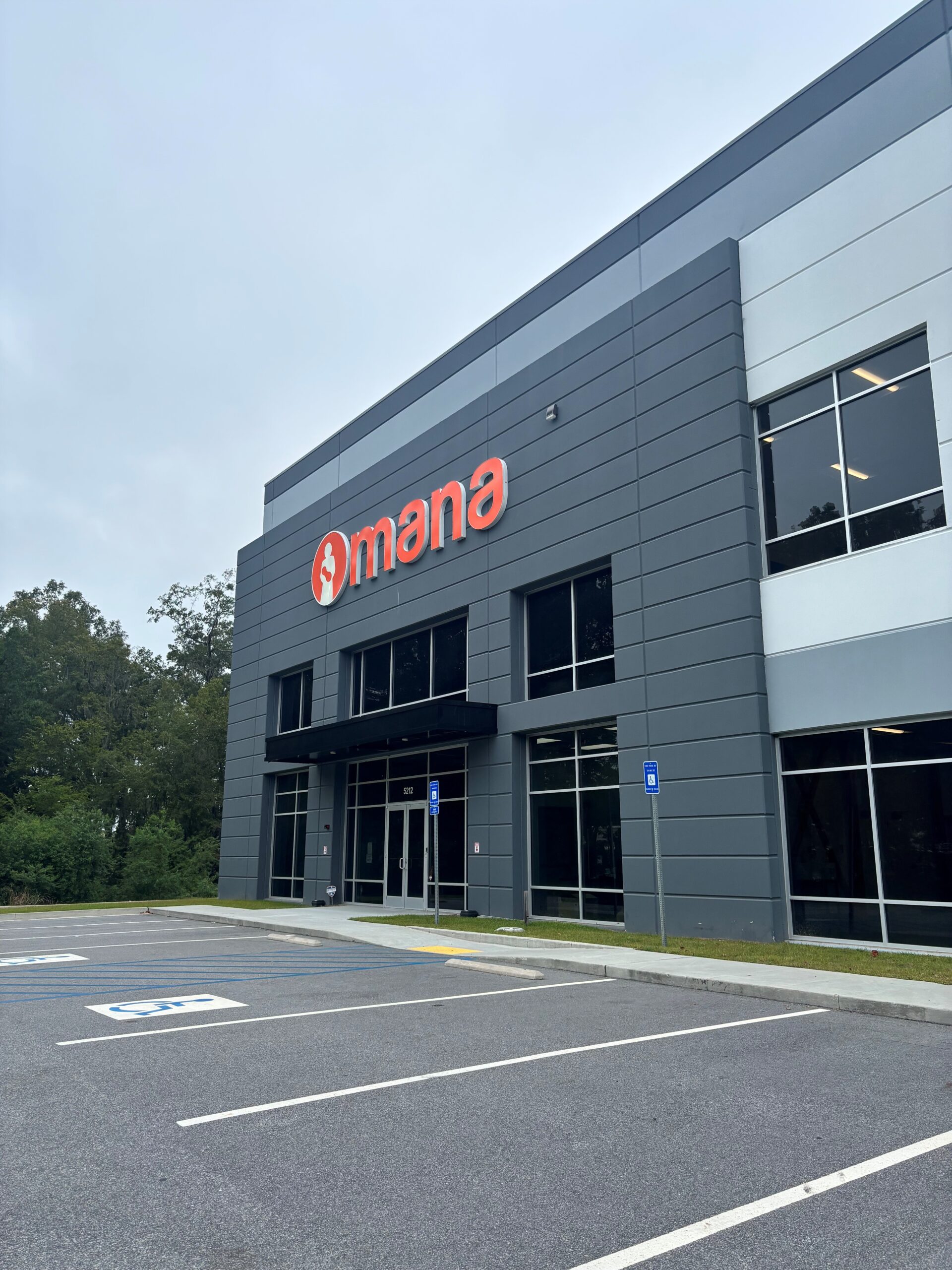
MANA Nutrition

Tour attendees visiting MANA Nutrition in Fitzgerald, Georgia, received an inside look into Ready-to-Use Therapeutic Food (RUTF). RUTF is a dense, nutrient-rich food used to treat severe malnutrition. The purpose of RUTF is to help children gain weight, improve strength, and restore overall health. It is made with milk, multivitamins, and peanut butter. The product is especially effective because it is shelf-stable and requires no preparation.

This stop was highlighted because every package of RUTF begins with peanuts grown in Georgia. MANA purchases approximately 2 million pounds of peanuts each month to produce the product. The Fitzgerald facility spans 135,000 square feet and has the capacity to produce 500,000 pounds of RUTF per day—enough to help feed up to 10 million children each year.

View the 2025 Georgia Peanut Tour Photo Album

From Field to Buying Point: Douglas Peanut and Grain Company

Attendees had the opportunity to visit a buying point in the heart of Coffee County, Georgia. Douglas Peanut and Grain Company serves as the first point of delivery for freshly harvested peanuts in the county. Once peanuts are harvested from the field, farmers must first tag their load right there in the field before transporting it—either in wagons or semi-trailers—to the buying point.

At the buying point, the peanuts undergo a drying process while still in the wagon. Once they are dried to the required moisture percentage, a sample is pulled, and the grading process begins. Grading is carried out by the Georgia Federal-State Inspection Service. After grading, the peanuts are moved into storage warehouses and eventually hauled to shellers for the next stage of processing.

View the 2025 Georgia Peanut Tour Photo Album

Surviving Hurricane Helene

In September 2024, a devastating hurricane tore through South Georgia, leaving the state’s agricultural industry with a major blow. Chicken houses were demolished, irrigation pivots overturned, and equipment sheds collapsed. Georgia farmers were unsure how they would move forward. Hurricane Helene tested their faith, but through resilience, determination, and heart, they began to clean up and rebuild. That is exactly what Clay McKinnon did. Tour attendees heard his story on the very farm that was once full of devastation.

Clay McKinnon is a third-generation farmer in Coffee and Atkinson counties. He farms alongside his father, Wayne. The McKinnons grow peanuts, cotton, corn, soybeans, and blueberries, in addition to raising poultry.

Ashley Smith, Extension agent, and Clay shared in detail the damage his farm sustained. Winds reached 125 mph as Helene tore through the area. The McKinnons lost five poultry houses, grain bins, and equipment sheds; pivots were overturned; debris scattered their fields; and their row crops, timber, and blueberries were heavily damaged. The estimated cost of the destruction was approximately $3 million.

Through it all, Clay pressed forward. Standing on the farm today, tour attendees saw new poultry houses, upright irrigation pivots, and healthy rows of peanuts and cotton. Everything on display stood as a testament to Clay’s resilience and passion for farming.

Additionally, at this stop, Ashley Smith walked attendees through a variety trial she has worked on with Clay. The varieties featured were GA-22MPR, GA-21GR, GA-23RKN, GA-06G, TIFNVHG, DG913, ARNIE, and FLORUN 52N.

View the 2025 Georgia Peanut Tour Photo Album